
A Scrappy Twist on the Classic Log Cabin Quilt Block
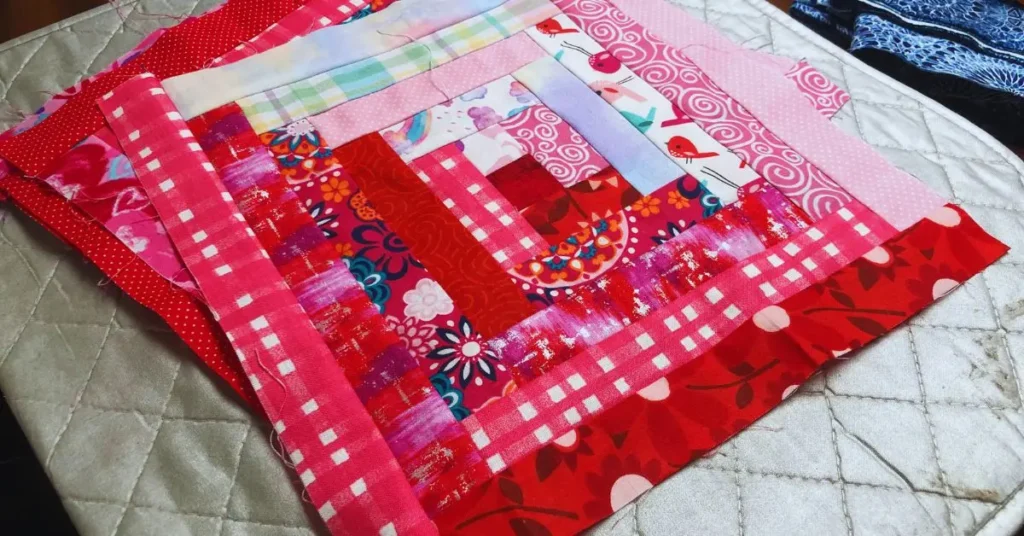
Y’all, this is my very first log cabin quilt block creation! I was so excited to see it come together. At first, I thought I’d bitten off more than I could chew, but it turned out to be easier than I expected. If I can do it, you can too! Full disclosure: this post is all about the blocks themselves. I’ll be putting them together later into a quilt for my granddaughter, and don’t worry, I’ll update this post once it’s finished.
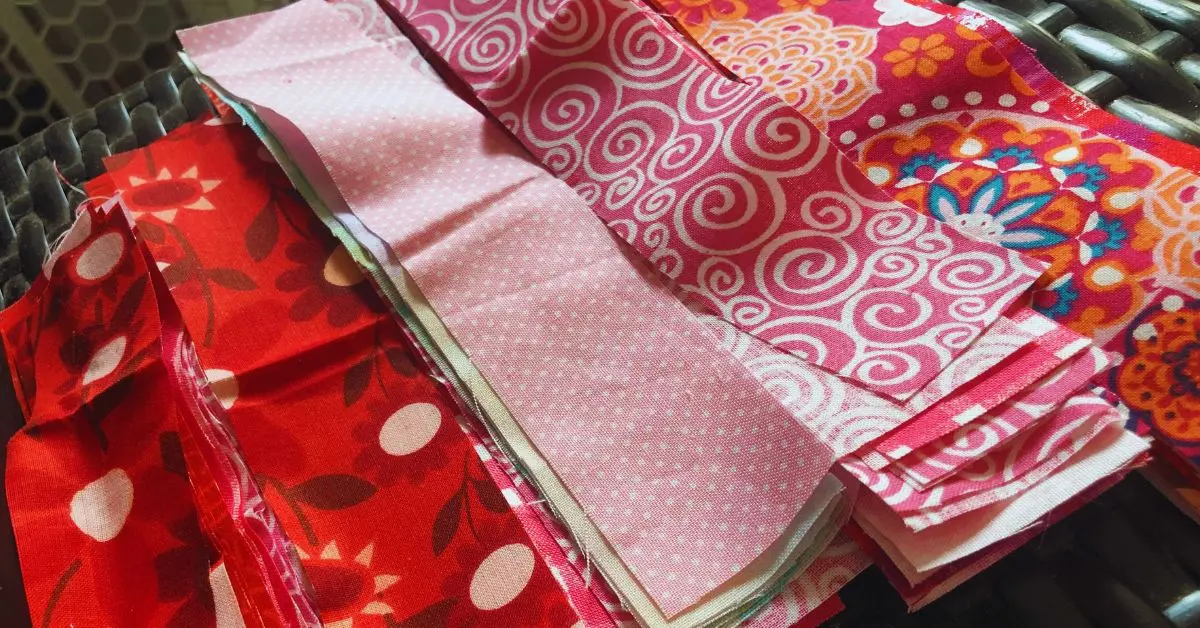
Choosing the Color Scheme
How I came across my color scheme was actually through YouTube. I wasn’t looking for a pattern at all, but the colors in a short video just jumped out at me. Once I saw them, the log cabin design really gave it a unique look. That’s when I started searching through my fabric stash, and everything came together.
My intention was for it to be scrappy because I knew I didn’t have enough fabric for all of my blocks, and that was perfectly fine. I think it came out perfectly this way. The only thing I had to buy was two fat quarters, and I’ll tell you why a little later.
Now, your classic log cabin usually starts with a red square, but this is not about classic. There are no rules when it comes to personal design. Choose colors you love. Before you cut, put them side by side to get a feel for how they look together.
A few tips I learned while arranging scrappy fabrics:
-
Mix darks and lights to give your block depth and contrast.
-
Don’t worry about every piece matching perfectly. The scrappy style is all about charm and personality.
-
Group fabrics with similar tones or patterns before placing them in the block. It helps balance the look without overthinking.
-
If you’re low on fabric, small pieces can still make a big impact when arranged thoughtfully.
Typically, one side of the block is lighter and the other side is darker. This contrast helps the block really stand out and gives it that classic log cabin feel, even with a scrappy twist.
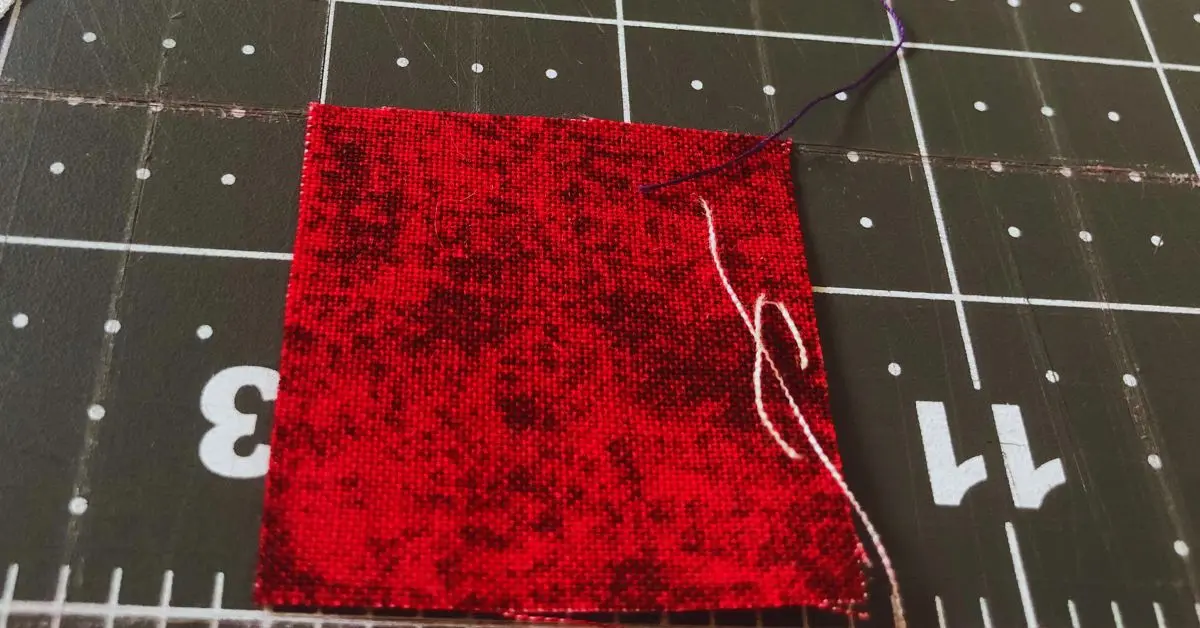
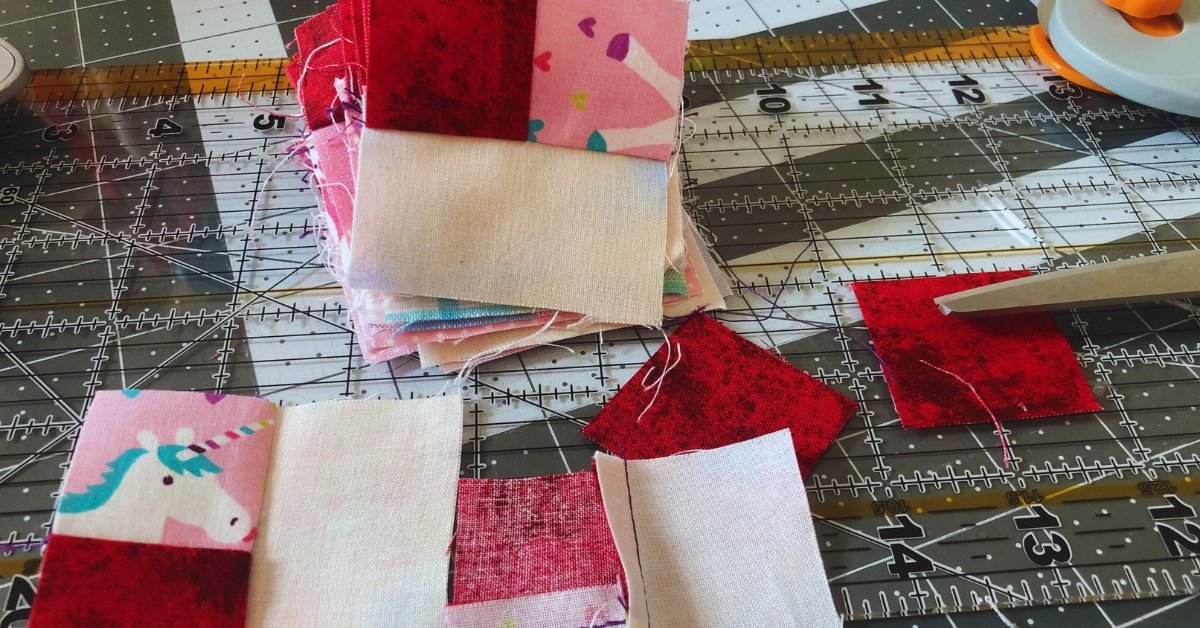
Watch Me Make My Scrappy Log Cabin Quilt Blocks
No fancy setup, no perfect cuts. Just me figuring out log cabin quilt blocks as I go and showing what actually worked.
Quilting Supplies I Actually Use
If you're just getting started or need a good refresh, these are the tools I reach for every time. They make the whole process smoother and a lot less frustrating. I’ve linked them in case you’re looking to build your own stash (and yep, these are affiliate links—thank you for supporting my quilting projects!).
Rotary Cutter, Cutting Mat & Ruler Set
This starter set has been a game-changer for me. The cutter is sharp, the mat holds up, and the ruler helps keep everything straight—even when I’m eyeballing things a little.
Rotary Cutter
I like this one because it’s comfortable to hold and slices clean through layers. It makes trimming blocks feel way less intimidating.
Quilting Ruler & Square Rulers
This ruler helps me stay on track, especially when I’m squaring up blocks. I can’t tell you how many times this saved me from a wonky quilt.
Quilt Clips
I use these instead of pins—so much easier, and I’m not constantly poking myself. Great for holding everything together while I stitch.
Self-Healing Cutting Mat
This one’s a staple in my sewing corner. It protects my surfaces, grips the fabric just right, and doesn’t end up full of deep grooves thanks to that self-healing surface.
Affiliate Disclosure: As an Amazon Associate, I earn from qualifying purchases. It doesn’t cost you anything extra, but it helps me keep sharing and sewing—so thank you!
2 inch Strips
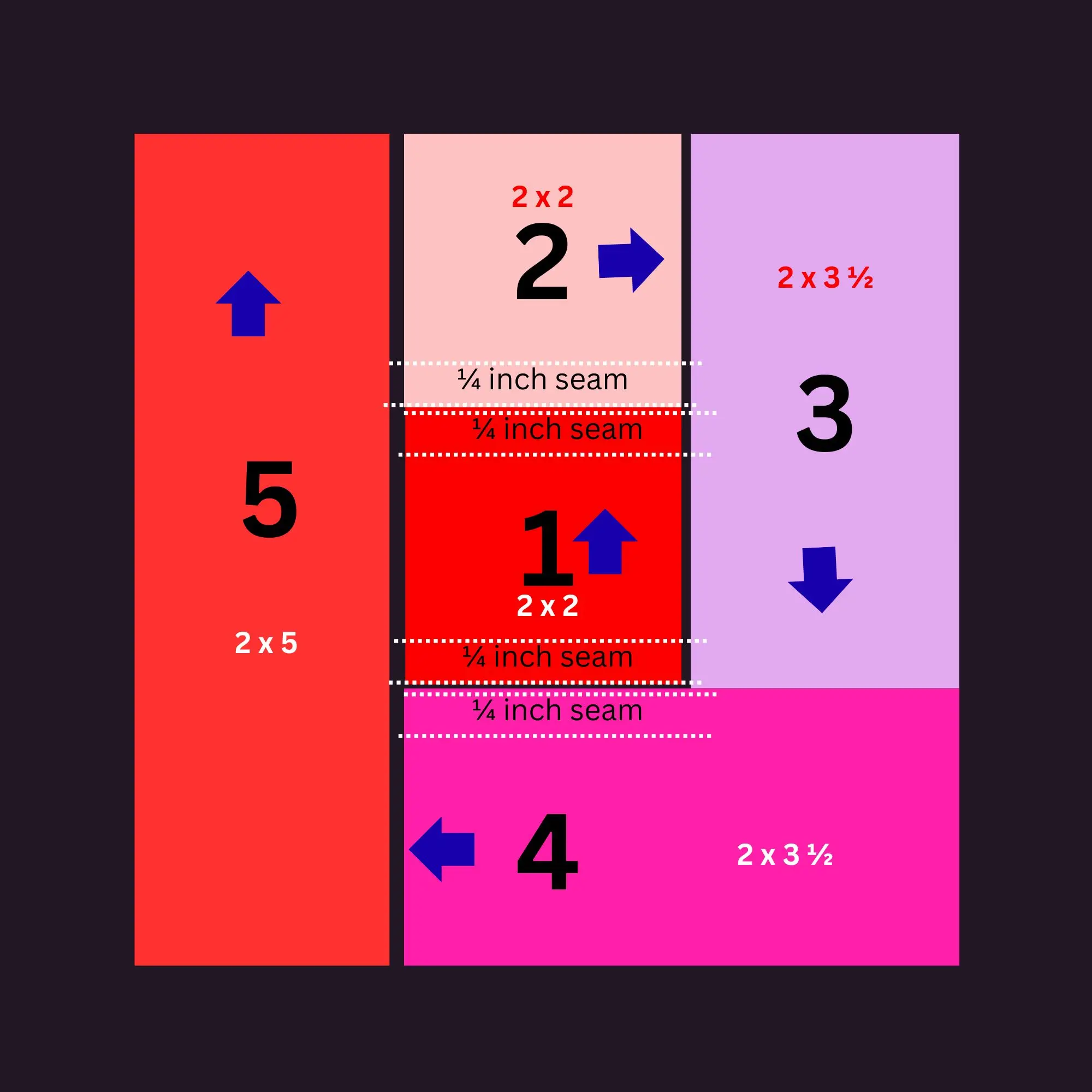
1 1/2 inch Strips

Making the Block
Since this was my first time making log cabin quilt blocks, I did use a pattern to help me understand the easiest way to put everything together. I wanted to focus on learning the construction without overcomplicating things, and using a pattern really helped it click. Once I made the first block, the rest came together much easier.
Strip Size and Block Measurements
All of my pieces are cut at 1 1/2 inches. My block finishes at roughly 11 1/2 inches with 1/4 inch seams. This strip size worked well for using up fabric scraps and kept the block from feeling bulky.
You do not have to use 1 1/2 inch strips. You can choose any width you like. Just remember that every round you add increases the size of the block.
Using Fabric Scraps
I did not worry about the grain of the fabric. My goal was to make the most of the fabric scraps I already had, even if that meant some pieces stretched a little. I am completely fine with that.
The blocks are slightly wonky, and I honestly do not care. I will square up the blocks or the quilt later when the time comes. The end result is so beautiful that a little wonkiness does not bother me at all.
Speeding Up the Sewing Process
Some quilters cut each piece as they go, but I chose to precut my strips. That made sewing the blocks much faster.
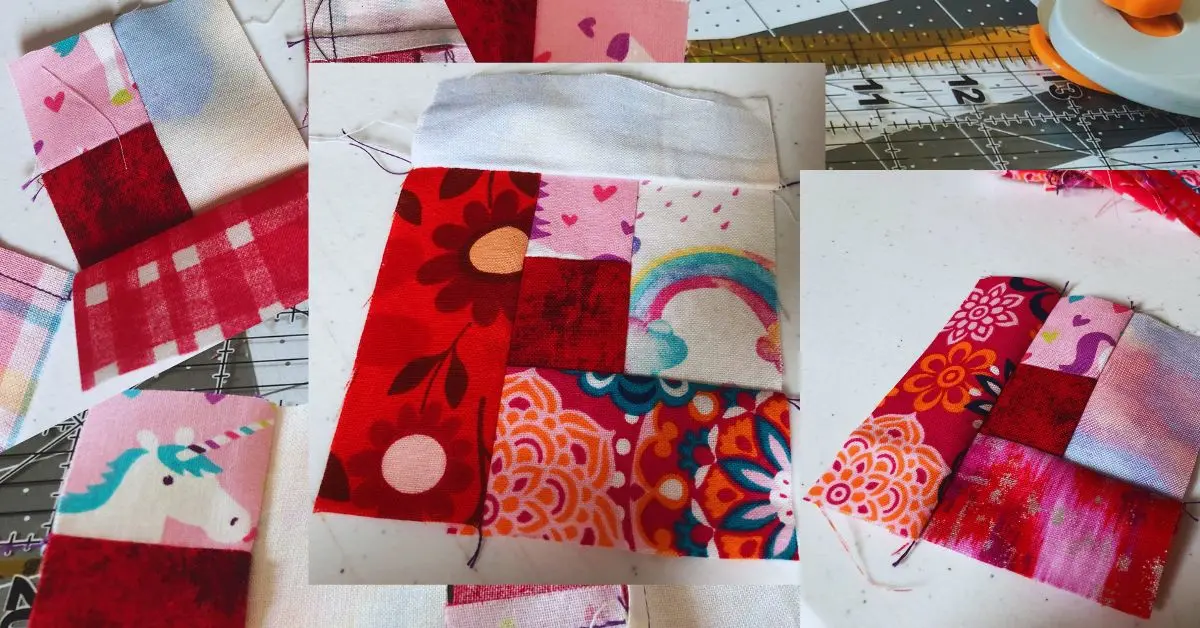
I also chain sewed, which really helped once I got into a rhythm. By the end, I had 48 blocks completed faster than I expected.
Light and Dark Placement
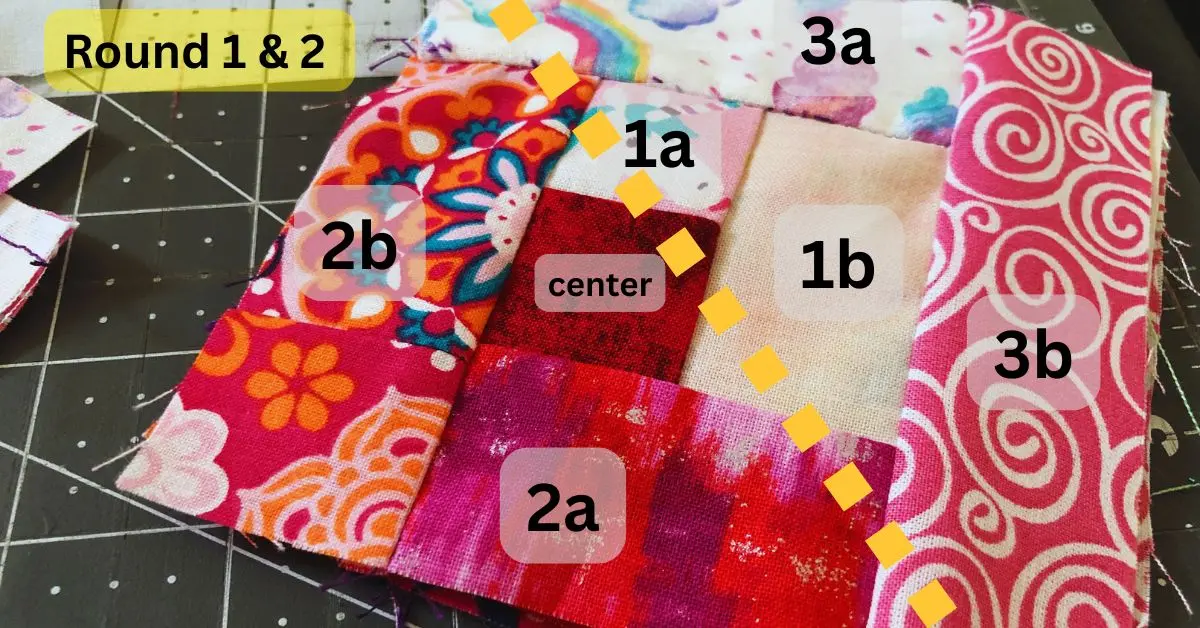
For my design, I chose a light side and a dark side. I placed the dark fabrics on the left side of the starting square. This contrast helped define the block and gave it the look I was going for.
How Log Cabin Strips Affect Block Size
Start with your center square – this can be any size you like. Typically, your strip width matches the size of your center square to keep the block balanced.
Pro tip: Matching your strip width to your center square makes the block easier to sew and keeps the proportions even.
Choose your strip width – this is the width of the fabric pieces you’ll add around the square.
Here’s how your block grows with each round depending on your strip width:
-
1.5-inch strips → each round adds about 1 inch to the finished side. For example, your block might grow like this: 1.5, 2.5, 3.5, 4.5, etc.
-
2-inch strips → each round adds about 1.5 inches to the finished side. For example, your block might grow like this: 2, 3.5, 5, 6.5, etc.
For each round, you’ll need two strips for the dark side and two strips for the light side. Add them one round at a time – sew around the square in the log cabin pattern.
Notice the growth – the finished block gets bigger with each round. Bigger strips make bigger jumps, smaller strips grow more gradually.
Square up at the end – don’t worry if the sides aren’t perfect while sewing. Trim the edges when you finish your block and it will look neat.
Tip for scrappy quilts – it’s okay if your strips are slightly uneven. The charm of a log cabin is in its scrappy, handmade feel!
Tips for Scrappy Quilting
Scrappy quilting is supposed to feel fun and relaxed, and that mindset really helped me with these log cabin quilt blocks. If you are working with scraps or fabric overages, here are a few things that made the process easier for me.
-
Stick to a loose color scheme. Even with scraps, having a general direction helps everything feel cohesive.
-
Separate lights and darks before you start sewing. This makes it easier to keep the contrast balanced in each block.
-
Do not overthink fabric placement. Scrappy blocks have charm because they are imperfect.
-
Precutting strips can save a lot of time, especially if you are making multiple blocks.
-
Embrace a little wonkiness. Blocks can always be squared up later, and small imperfections usually disappear once the quilt is finished.
Scrappy quilting is very forgiving. The more you relax and trust the process, the better the blocks come together.
Frequently Asked Questions
Are log cabin quilt blocks good for beginners?
Yes. Log cabin quilt blocks are a great choice for beginners because they are built one strip at a time. Once you understand the layout, the construction is very straightforward.
What is the best strip width for log cabin quilt blocks?
There is no single correct strip width. Many quilters use wider strips, but smaller widths work just as well. The key is staying consistent and remembering that each round increases the size of the block.
Do log cabin quilt blocks have to be perfectly straight?
No. Small imperfections are very common, especially with scrappy blocks. Blocks can always be squared up later, and minor wonkiness usually disappears once the quilt is assembled.
Can I mix light and dark fabrics any way I want?
Yes. While traditional log cabin blocks follow specific color placement, personal design allows you to arrange lights and darks in a way that feels right to you. Contrast is what matters most.
How many log cabin quilt blocks do I need for a quilt?
That depends on the finished size of your blocks and the quilt size you want to make. Smaller blocks require more pieces, while larger blocks need fewer.
Do log cabin quilt blocks work well with fabric scraps?
Absolutely. Log cabin quilt blocks are one of the best ways to use fabric scraps and leftover yardage. Scrappy blocks add character and make each quilt unique.
Give It a Try
One of the best things about log cabin quilt blocks is how flexible they are. You can follow the method and totally make it your own. There is no right or wrong way to do it.
I’m already planning my next log cabin project. This time, I think I’ll try a larger block—maybe 2-inch strips—and I’m going to skip the light and dark contrast entirely. I have a feeling it’s going to be a real treat.
I hope this inspires you to get creative and try something new. Don’t be afraid to experiment or attempt something you’ve never done before. As I always say, if I can do it, you can too.
The most important part is to have fun, enjoy the process, and let your personality shine through in your blocks. Log cabin quilting is forgiving, so it’s a perfect way to explore your creativity and make something unique.
Nothing says comfort like a handmade quilt but a warm, hearty bowl is a close second. Add a simple loaf of bread and you have the ultimate cozy combo.
So go ahead, try my navy bean soup recipe and finish it off with this easy french bread. It is the kind of comfort that makes you want to slow down, dig in, and savor every bite.
