
Bake vs Roast: What’s the Real Difference?
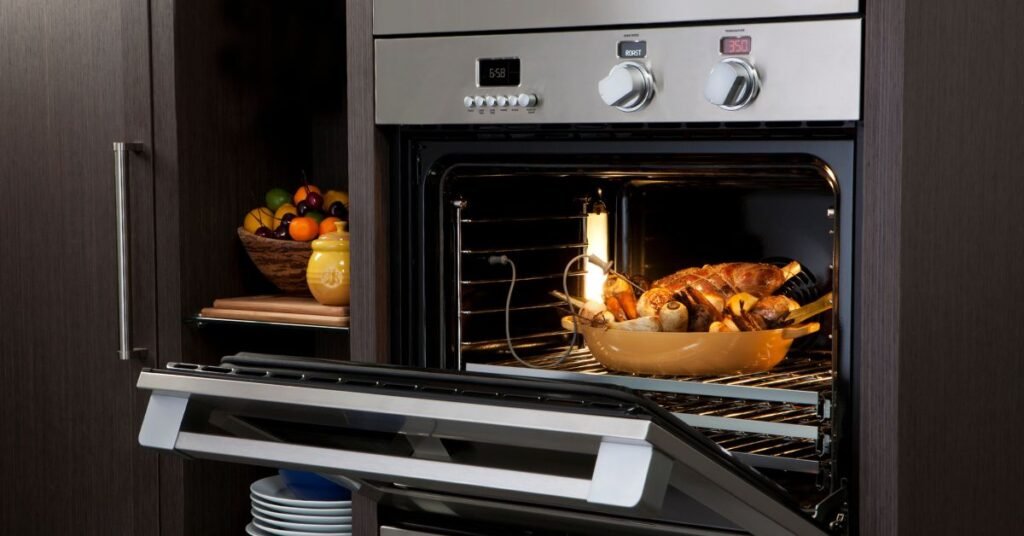
When I think of baking, I think of breads, cakes, cookies. Some type of bready concoction that rises in the oven.
And I think most of us agree on that part. No one says they’re roasting a cake.
The confusion starts when we move away from desserts and into meat and vegetables. That’s when recipes start using the words bake and roast almost interchangeably, and beginners are left wondering if they’re actually different.
And the truth is, they are. But it depends on what you’re cooking and how you want it to turn out.
Let’s break it down in simple, real-kitchen terms.
What Is Baking?
When most of us think of baking, we think of things that start out soft and need structure.
Breads. Cakes. Muffins. Cookies.
But we also bake casseroles.
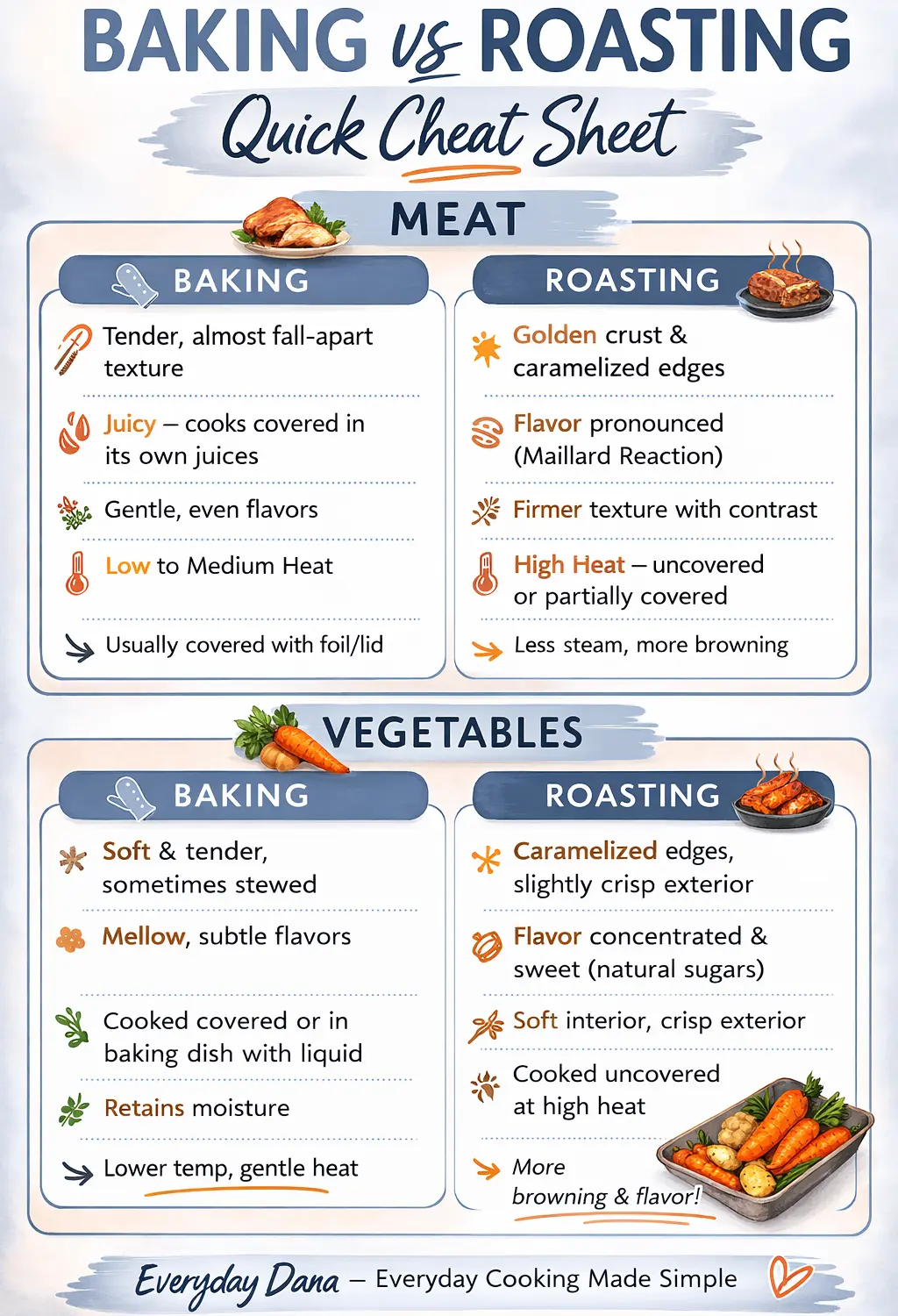
These foods usually begin soft or partially cooked and rely on steady, even oven heat to set, firm up, and cook through. Baking is typically done at moderate temperatures, and the goal is even cooking from edge to center.
You’re building structure or gently cooking something through. You’re not trying to aggressively brown the outside.
What Is Roasting?
Roasting is usually used for foods that already have structure.
Think meats and vegetables.
Unlike baking, roasting focuses more on browning and developing deeper flavor on the outside while the inside cooks through. The goal is often a crisp exterior, caramelized edges, or a golden crust.
Roasting typically uses higher heat than baking, which helps create that color and texture people love on roasted chicken or vegetables.
You’re not trying to build structure. You’re trying to build flavor and texture.
Bonus Hack from My Kitchen
Start with a Dry Surface: For veggies or meats that you want to roast, I always pat them dry first. Moisture is the enemy of crisp edges. Even a little water on the surface can steam your food instead of roasting it.
Use Small Amounts of Fat Strategically: A drizzle of olive oil or a small pat of butter can make a huge difference. I coat veggies lightly so they brown evenly without becoming greasy. For meats, rubbing a tiny bit of fat under the skin helps flavor without adding extra calories or sogginess.
Flip and Rotate: Don’t just set it and forget it. About halfway through roasting, I flip veggies or rotate the pan. This ensures even browning and flavor development on all sides.
Finish with a Pop of Freshness: A squeeze of lemon, a sprinkle of fresh herbs, or a tiny drizzle of balsamic at the end can make a roasted or baked dish feel more layered and complex without adding more heat or fat.
Top Foods for Baking vs Roasting
Here’s a quick guide to help you know what works best for each method:
Top 5 Foods to Roast: Carrots, potatoes, brussels sprouts, chicken with skin, salmon fillets.
Top 5 Foods to Bake: Casseroles, breads, muffins, lasagna, layered desserts.
Frequently Asked Questions About Baking vs Roasting
Here are some common questions I get about when to bake and when to roast, plus tips for getting the best results in your kitchen.
Q: Can I bake a casserole at higher heat to get browning like roasting?
A: Casseroles are always baked, not roasted. You can increase the heat or add a broil step at the end to get some browning on top, but the cooking method is still considered baking because the dishes are layered dishes cooked evenly through, not a roasting classification..
Q: Do I always need high heat to roast?
A: Not always. High heat helps brown and caramelize, but for delicate vegetables or lean meats, medium-high heat can prevent burning while still creating flavor.
Q: Should I cover foods when roasting?
A: Usually foods are roasted uncovered to encourage browning. Sometimes I partially cover to avoid burning, especially with longer cooking times or high-fat meats.
Q: Can I bake and roast in the same oven at the same time?
A: You can, but keep in mind that temperature needs may differ. I usually adjust racks so foods cook evenly and keep an eye on browning to avoid overcooking one item.
Q: How do I know when something is done baking or roasting?
A: For casseroles, check for even heat and bubbling. For roasted meats, use a thermometer or check juices. Vegetables should be tender with golden edges for roasting.
Baking and roasting don’t have to be confusing. Remember: low to medium heat with a cover is usually baking, while higher heat without a full cover is roasting. Apply these methods to meats, veggies, and casseroles, and you’ll notice a big difference in texture and flavor.
Cooking is about tasting, experimenting, and trusting your instincts. Try roasting carrots and baking chicken low and slow this week, textures and flavors, and have fun in the process.
If you liked this post, you might also enjoy:
